



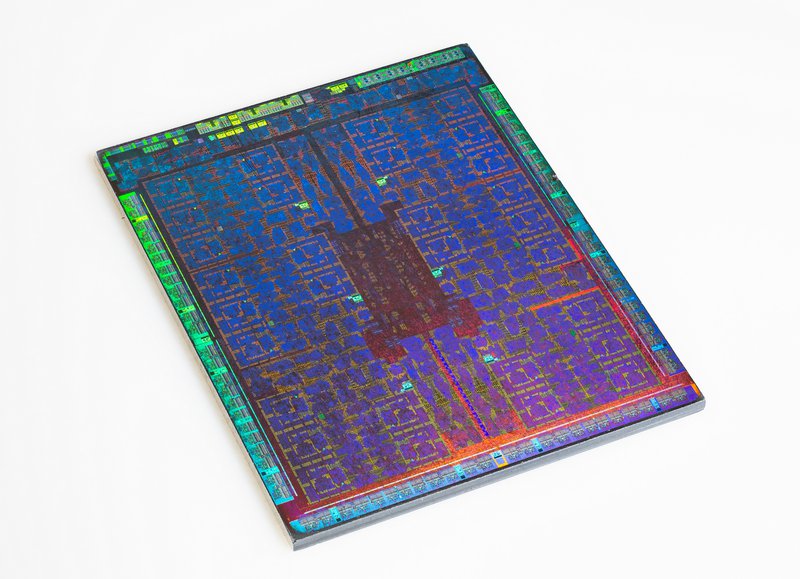
The Chinese leadership in recent months renewed its emphasis on artificial intelligence (AI) technologies as essential to the country’s development goals. Among the most crucial technologies fueling AI systems are semiconductors, an area where Chinese companies, including those such as Huawei that are frequently subject to U.S. government scrutiny, are hard at work.
It’s not just that Chinese companies would like to compete in these technologies. The Chinese government wants independence from international suppliers. Last month, in the first known Politburo study session on AI, General Secretary Xi Jinping said China needed to “ensure that critical and core AI technologies are firmly grasped in our own hands.”
And in a wide-ranging speech to the National People’s Congress Standing Committee, a leading scholar from the Chinese Academy of Sciences (CAS) assessed China’s strengths and weaknesses in AI fields, calling for China to “construct an independent and controllable innovation system.”
The scholar, Tan Tieniu, made explicit what has long been apparent: U.S. government actions toward the Chinese network infrastructure and smartphone giant ZTE have increased Chinese resolve. ZTE was threatened with destruction and actually shut down operations after U.S. authorities moved to ban it from purchasing crucial components after it said ZTE breached a settlement in a previous case in which ZTE admitted to violating U.S. sanctions on Iran and North Korea.
Though many in China thought ZTE had been reckless, the fact that the U.S. Commerce Department had the leverage to practically destroy a major Chinese company focused many minds. Only after Xi intervened with Trump was the company saved.
In this context in April, Xi reminded audiences of the value of “self-reliance” and touted “indigenous innovation” in “core technologies” at the important National Cybersecurity and Informatization Work Conference.
“The U.S. ban on ZTE,” Tan said in his speech, “fully demonstrates the importance of independent, controllable ‘core-, high-, and foundational’ technologies.” Although the “core-, high-, and foundational (核高基)” formulation dates back at least to 2006, Tan coined a “new core-, high-, and foundational” concept and described it as follows:
“‘New’ refers to the new type of open innovation ecosystems such as civil-military integration, and the integration of industry, academia, and research. ‘Core’ refers to core and critical technologies and components, such as advanced machine learning technology, robust pattern recognition technology, and low-energy-use intelligent computing chips. ‘High’ refers to high-end integrated application systems and platforms, such as machine learning software and hardware platforms, and large-scale data platforms. ‘Foundational’ refers to theories and methods with great innovative significance and potential for driving technological progress, such as brain-computer interfaces, brain-like intelligence, etc.”
Semiconductors: The technologies at the core of core technologies
Whether it’s “core-, high-, and foundational” or just “core,” semiconductors are an essential part of Chinese efforts to develop indigenous or independent technologies—especially in AI fields.
The influential New Generation Artificial Intelligence Development Plan (AIDP), issued in July 2017 and translated by DigiChina, noted China was “lacking major original results in … high-end chips.” The AIDP called for breakthroughs in “intelligent computing chips and systems,” “high energy efficiency, reconfigurable, brain-inspired computing chips” and “new-model perception chips,” as well as those adapted for Internet of Things devices.
Half a year after the AIDP, Chinese efforts in semiconductors were still nascent and uncertain (see section 5, “Semiconductors: Attempting to Chart a Different Course” here).
Within the last six months, the major AI platform companies Baidu and Alibaba have both announced plans to develop their own AI-optimized semiconductors (or ICs, for “integrated circuits”). The companies are likely to follow leading Western firms, with “fabless” IC design shops—operations that turn out chip designs that are then fabricated by leading IC companies such as Taiwan Semiconductor Manufacturing Corporation (TSMC). All of China’s leading AI chip players are signed up with TSMC for production–Taiwan’s semiconductor prowess is China’s secret weapon in the coming semiconductor and AI chip wars.
Chinese Semiconductor Efforts So Far


