



China’s ninth annual World AI Conference (WAIC) was held from July 17–20 in Shanghai. Escalating points of tension in the U.S.-China AI competition, including tit-for-tat cybersecurity measures aimed at frontier models and U.S. labs’ reiterated emphasis of the risks posed by China’s AI ascendancy, meant this year’s gathering would be a crucial venue for Beijing to pitch an alternate model for global AI development. Top Chinese leader Xi Jinping’s decision to give the WAIC’s keynote address further emphasized the Chinese government’s focus on the issue. DigiChina invited a group of specialists to weigh in on the implications of Xi's speech, a new initiative released by the Cyberspace Administration of China and the National Development and Reform Commission, the establishment of the Shanghai-based World AI Cooperation Organization, and the seemingly coordinated release of Moonshot AI's Kimi K3 model.
REBECCA ARCESATI
Head of the Science, Technology and Innovation Program, Mercator Institute for China Studies
Xi chose his in-person debut at the World AI Conference (WAIC) to deliver a rare speech on AI, representing one of his most significant public interventions on AI to date. Previously, Xi’s richest speeches on AI had come from Politburo Study Sessions, and outsiders only got to see summaries. Here, he was addressing both the nation and the world.
What emerges starkly from his speech is the Chinese leadership’s vision, evolved and matured over a decade, of a world where humans find ways to collaborate with machine intelligence. “How to get along with thinking machines?” Xi asks shortly after beginning his speech. We find references to “integration,” “connectivity,” and “collaboration”—all familiar concepts in Chinese AI policy, reflecting the CCP’s high expectations for physical AI to boost growth, development, and societal wellbeing. Not surprisingly, agents and embodied AI were in the spotlight at this year’s WAIC.
A precondition for all this, in the CCP’s view, is that AI technology remains firmly under human control. “Controllability” (可控) has been a consistent leitmotif in Chinese AI policy, but what is meant by “control” can vary widely. (For example, it may refer to political control, cybersecurity, or the preference toward domestic technology.) What is new and more interesting is Xi’s explicit reference to “loss of control” (失控), probably best understood as the risk of AI systems running afoul. Xi had already sounded the alarm at a Politburo Study Session in January in a discussion of future technologies writ large. However, this is his first known mention of loss of control risks specific to AI—and it appeared in a public speech.
Still, it is not immediately clear from Xi’s WAIC speech, nor from other policy signals, that China’s leaders are concerned about alignment risks as understood by the international AI safety community. One cue that Xi might be concerned about safety flaws in model design lies in his distinction between “inherent and secondary risks” (内生和衍生风险).
Xi’s choice of words could indicate an intensified worry that AI systems might behave unpredictably. If we take an essay that appeared in the party’s top theory journal a day before Xi’s WAIC speech at face value, then the CCP would seem to be leaning toward a wider definition of human control that encompasses the preservation of human judgment, subjectivity, and power in the AI age. By contrast, current international (especially Western) AI safety debates emphasize existential risks from superintelligence.
Media reports suggest that some restrictions on access to Chinese open-source models could be on the horizon, yet it remains unclear whether this emerging discussion on AI export controls stems from genuine concern around alignment risks or reflects Beijing’s growing preoccupation with technology and know-how leakage. It will be key to watch whether top-level signals like Xi’s speech result in an acceleration of technical safety research—or a tighter regulatory grip on the industry.
SAMM SACKS
Senior Fellow, New America and the Johns Hopkins SAIS Institute for America, China, and the Future of Global Affairs
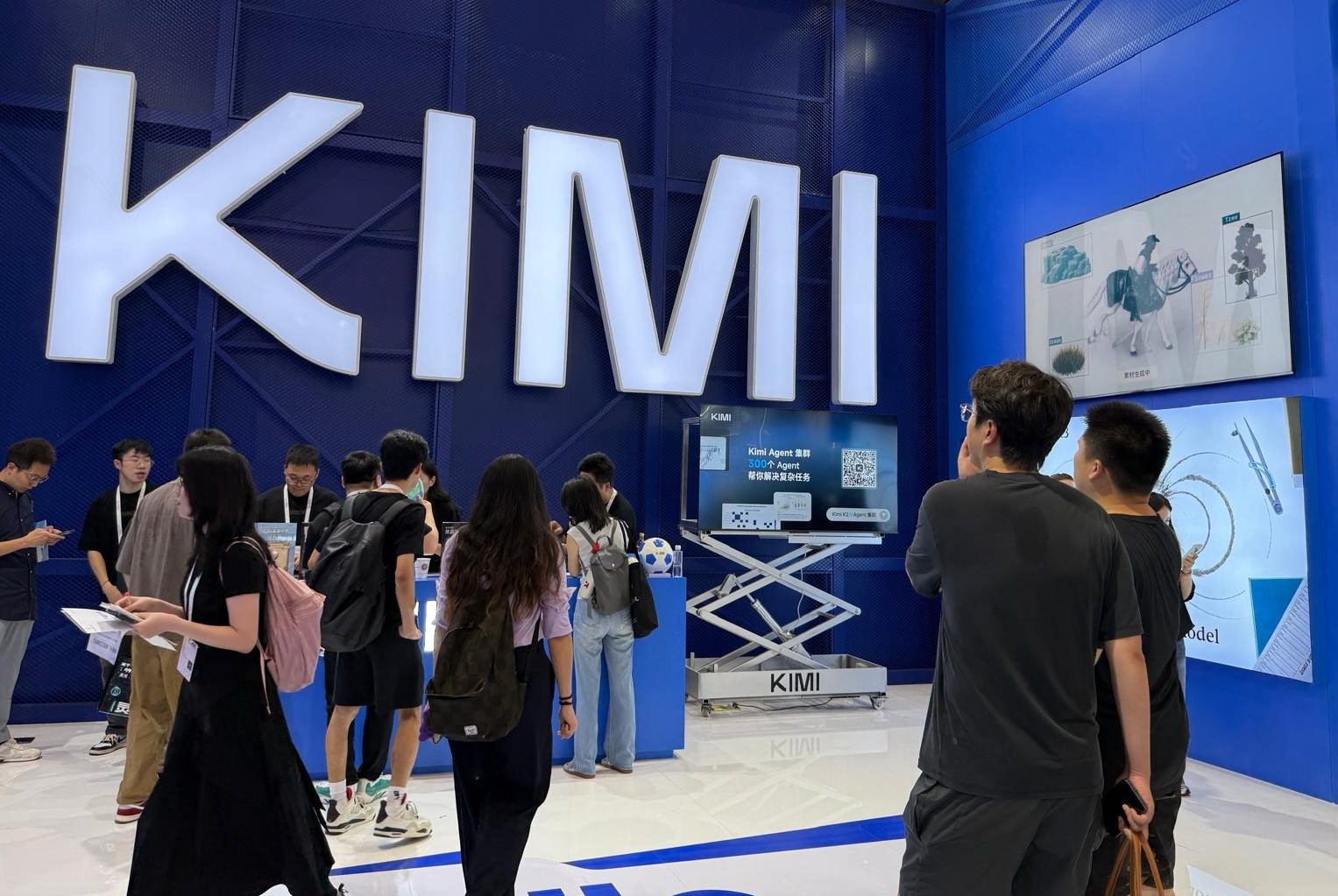
People from the mountains to the sea (人山人海) combined with 100°-plus temperatures in Shanghai humidity made for a sweat-drenched expo hall at this year's World AI Conference last weekend. I was relieved to find some company booths handing out cold water bottles—as long as I scanned my WeChat QR code to follow them. The Moonshot AI booth looked relatively barebones compared to more gimmicky displays elsewhere. I never would have thought that this was the very same company whose announcement of the powerful Kimi K3 model coincided with the WAIC and sparked a firestorm among U.S. policymakers. What Moonshot had on offer was a chance to win free tokens—if you follow them on RedNote (Xiaohongshu). "This is the next DeepSeek moment!" a young woman staffing the booth told me excitedly.
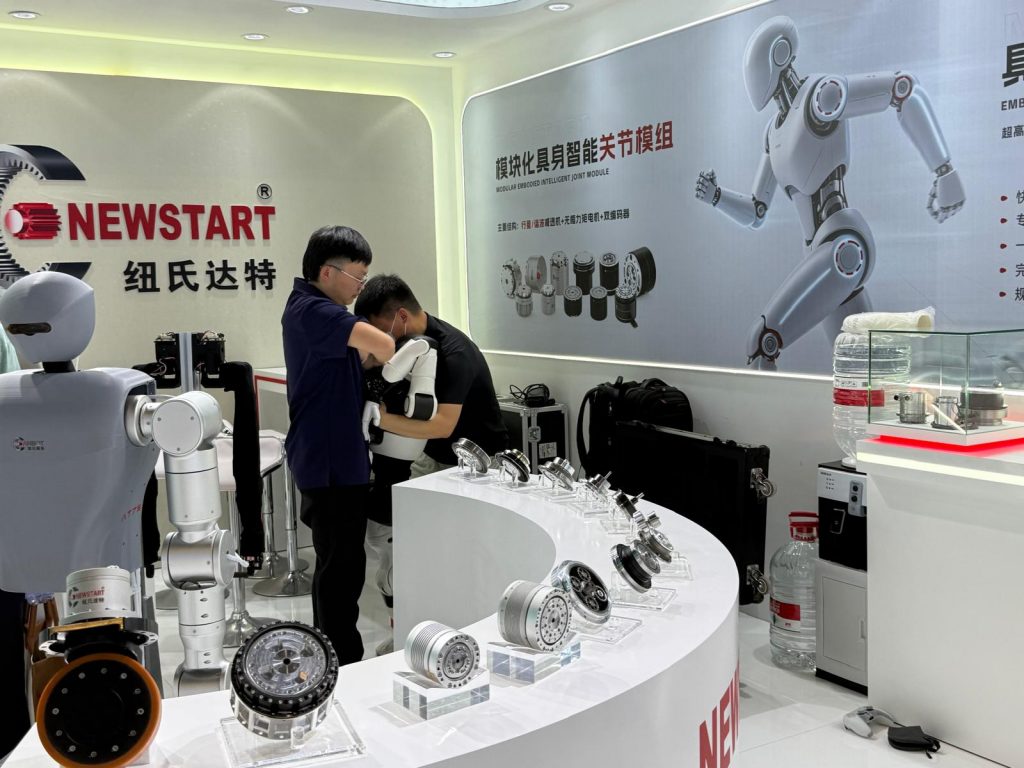
Many of the thousands of visitors focused on the humanoid robots in the expo hall, but I spent some time at booths showcasing robot actuators. Actuators enable robots’ physical movement and weight-bearing, like joints in animals, and they come in all sizes. Some of the smallest are used for robotic fingers and hands, which are quite difficult to make well but go a long way to improve industrial robots’ ability to perform fine tasks. This is one part of how AI technologies might, as President Xi Jinping has charged, drive “prosperity.”
Leadership speeches took place in a separate building across the street from the public throngs in the expo hall. Here is where government officials and academics used careful language on stage, signalling broad ambitions and policy guidance that companies will interpret and may benefit from aligning with. The smaller sub-forums I attended delved deeper into the theme of how to govern AI agents—how, in other words, to assure the “security” Xi calls for alongside prosperity.
This year’s theme, agents, were touted as a major driver of productivity, but they also create immense challenges for security and safety. Should agents be given legal status, including liability? Should humanoid robots have ID cards from factory to end of life—similar to a national ID card for citizens but with more digits—so they can be monitored and assessed for safety and ethics in real time? Will agents from one country be able to interoperate with those from another, and what technical standards should govern those interactions? What should governments do about the fact that AI needs access to training data but agents strain existing data protection guardrails like consent, purpose limitation, and minimization?
I wandered to the mall in between these two massive conference halls seeking more air conditioning away from the throngs. In the basement food court, I encountered a light-hearted counterpoint to the international narrative of a U.S.-China battle for AI supremacy: An elderly woman smiled and put up her dukes, while a humanoid robot posed next to a boxing ring with gloves at the ready. It was a reminder that beneath the grand rhetoric of great power competition are real people trying to make their way in an unknown technology future.
KENDRA SCHAEFER
Director of Tech Policy Research, Trivium China
In his speech to the WAIC, Xi’s reiteration of China's commitment to open-source AI was notable, particularly considering recent speculation that Chinese companies won't be able to keep open-sourcing their tools much longer, for two reasons. First, training frontier models is expensive. The bigger models get, the more revenue AI firms will need—making closed-source proprietary models ever more tempting as revenue generators for Chinese firms. Second, as open-source models grow more powerful, the risks of releasing them into the wild grow ever greater.
In his speech, Xi indicated that China isn't ready to walk away from open source just yet, safety concerns notwithstanding. The global popularity of Chinese open-source tools presents a once-in-a-generation opportunity to cultivate global dependency on the Chinese stack, particularly in the absence of cheap, open U.S. alternatives.
However, he also made it very clear that attention to AI regulation, ethics, and governance has been elevated substantially within the Chinese government. As a result, we should expect a tightening of AI regulation in China. The speech calls for new AI laws and regulations, technical risk-monitoring systems, and emergency response mechanisms. In the immediate future, this will most likely result in ramped up pre-release capability testing and stricter rules on what Chinese AI providers can release.
Xi’s support for AI development, and open source in particular, goes hand in hand with his focus on stability. We can expect China to vigorously pursue AI competition, keeping both development and stability ahead of any near-term gains.
That competition has global valence. The founding of WAICO represents China's bid to compete with the US on global AI governance (a deliberate counterweight to Western-led bodies like the Global Partnership on AI) and a pathway for pushing the Global South onto China's AI stack. What's interesting here is the bet Xi is making: that developing countries, priced out of frontier US models and wary of being rule-takers in institutions they didn't build, will find a Shanghai-based alternative attractive. China's efforts at establishing tech governance organizations haven't historically been particularly successful, but this offer is more attractive than most. Still, I won't be convinced the effort is gaining real traction until I see sign-on from a broader range of countries.
This Forum entry was adapted from Schaefer's commentary originally published in the Trivium Tech Daily newsletter.
JOHANNA COSTIGAN
Editor-at-Large, DigiChina
The WAIC clarified that Beijing sees no need to be subtle in its attempt to recruit friends not from the west, but from the far larger rest. China’s National Development and Reform Commission’s AI Development Cooperation Action Plan includes a pointed line on “contributing global public scientific goods to the Global South.” The cyberspace administration’s new initiative on global governance of AI agents dedicates a section to “respecting diverse governance models.”
And in his keynote address, Xi Jinping said developing and deploying AI “should not erode or undermine the diversity of world civilizations or the cultural uniqueness of other nations.” Policymakers in Washington are primed to dismiss lines like this, but they are not the target audience.
China’s offers to protect developing countries from the threat and arguable reality of exclusion from the emerging AI-driven economy probably carry more weight to leaders (and citizens) of countries that are not home to frontier AI labs. At the risk of pointing out the obvious, that covers most of the world.
Still, China’s high-minded proposal of AI sovereignty and simultaneous equality will face severe obstacles in application. For one, Beijing’s stubborn claim that it is part of the developing world is increasingly strained as China’s geoeconomic power becomes harder to downplay. And nothing from these government documents is likely to convince anyone that China wouldn’t prioritize its political preferences over the promises of diversity and equality made ahead of the WAIC.
Take Taiwan’s approach to AI, for example. In an effort to reduce dependencies on Chinese training data and models, Taiwan is advancing a local LLM built on Taiwanese government data, Taiwanese ethnic minority languages, and traditional Chinese characters (the PRC uses a simplified script). It’s hard to imagine Beijing supporting that effort, no matter how many times it calls for respecting other cultures in AI development.
XIAOMENG LU
Director, Geo-Technology, Eurasia Group
One notable detail in Xi's WAIC speech was his prominent placement of “inherent and secondary” (内生和衍生) AI risks—and the need for an early warning system. In the past, safety issues tended to stay at the bottom of leader commentaries, or they would receive a dutiful nod in a brief catch-all reference alongside other governance topics. A few days earlier, at a national science and technology conference, Xi also devoted more substantive attention to AI safety. Together, these signal a subtle but meaningful posture shift.
When Chinese models lagged, Chinese decision makers treated foundation model safety as a distant, and low priority concern. Sophisticated regulation of applications was deemed sufficient, and existential risk was not seen to be quite so imminent or material as some western researchers portray it to be. Now that Chinese models are approaching the frontier, Beijing's rhetoric reflects a more forward-leaning posture on safety—a recognition that credible global leadership requires engaging with shared international concerns, in addition to showcasing capability.
Last year, over 200 prominent AI researchers and former heads of state signed the global Call for AI Red Lines, urging the UN to establish binding thresholds for AI development. As China’s models close the gap with their American competitors, its leaders have a greater incentive to demonstrate that they understand and share the concerns of international audiences such as those signatories—particularly in markets where adoption will have a meaningful impact on the global competitive landscape of AI.
Whether this shift is strategic or opportunistic, and whether words will translate into action, remains to be seen. For now, China emphasizes application safety and imposes modest requirements on foundation models. But this could represent a meaningful opening to revisit this issue in various forums, including the U.S.–China bilateral AI dialogue that is still taking shape. Comprehensive discussion on AI safety may be one of the few areas where American and Chinese interests begin to overlap.


